Vision

Introduction

Why Regeneration, Why Now, Why Cities

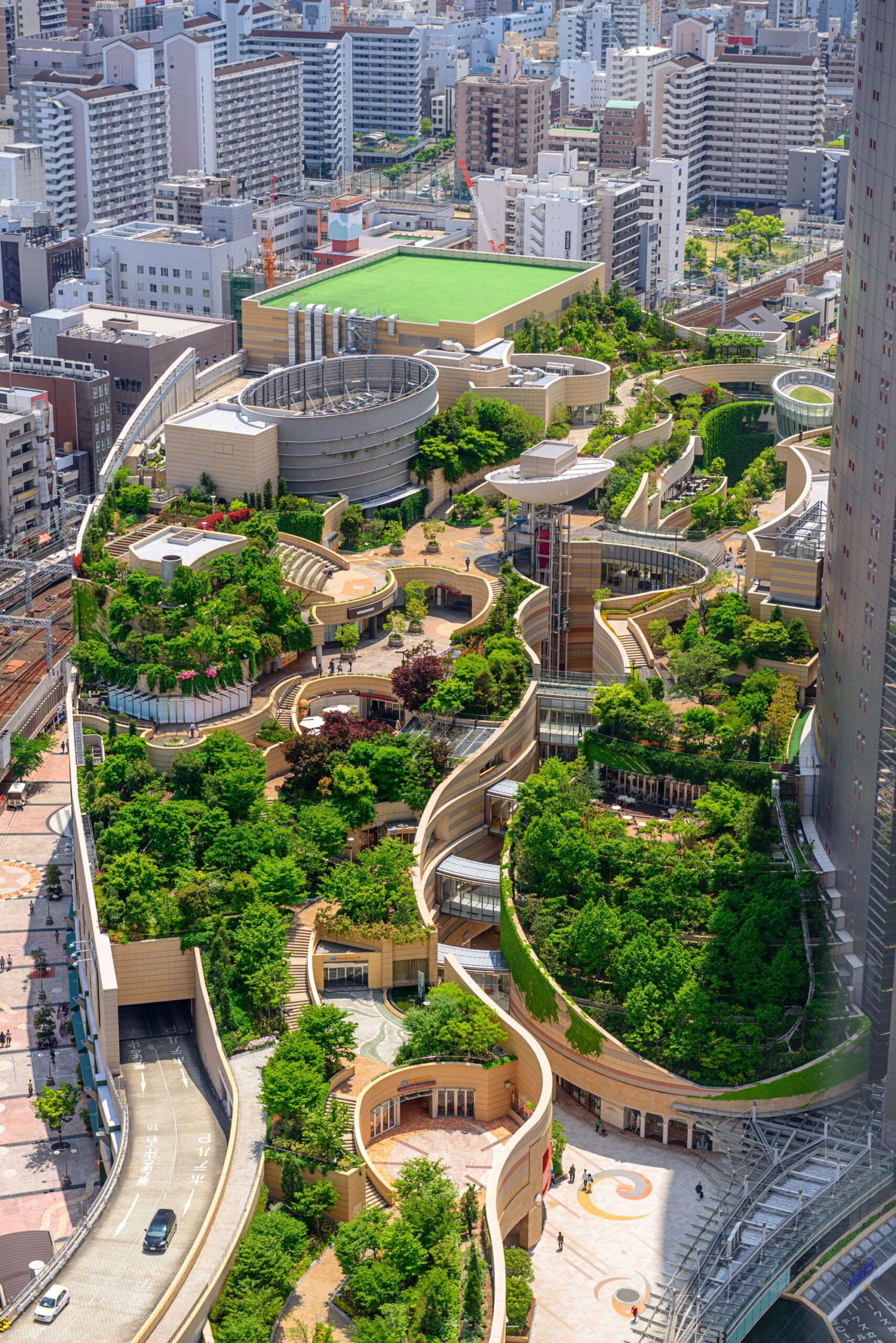
Regenerative cities create expanding cycles of positive change. They don’t just sustain—they actively improve the health of people, nature, and economies. Every industry, person, and community is a stakeholder in this transformation, with all sectors—from technology and manufacturing to education and healthcare—able to reimagine their role in creating thriving territories.

The question isn’t whether to change, but how quickly we can scale this transformation, coordinating efforts to create a unified impact rather than fragmented actions.

Cities are the critical leverage point for planetary regeneration

As UN Secretary-General António Guterres declared, “cities are where the climate battle will largely be won or lost.” Home to over half the world’s population, covering just 3% of Earth’s land, and responsible for more than 70% of global emissions, cities concentrate both our greatest risks and our most powerful opportunities.

Regenerative cities unite urban and rural territories, businesses, institutions, governmental bodies, local public authorities, and diverse communities, harnessing social capital, innovation, and cutting-edge technologies, including generative AI, to accelerate and amplify regenerative impact: it is a whole-of-society transformation where every industry and individual contributes to and benefits from regenerative outcomes. 

Regenerative cities “give forward” by creating expanding positive cycles that continuously improve ecological, social, and economic conditions.
Territories embracing regeneration become seeds of possibility, showing that urban systems can enhance, rather than degrade, their environments.

Regenerative Cities Manifesto

This Manifesto expresses a collective vision for regenerative cities. It is promoted by Tokyo Tatemono and Future Food Institute to inspire a global movement that goes beyond any single organization.

Tokyo Tatemono – with over a century of pioneering urban development – now embraces a new vision of leadership. As cities around the world face the interconnected crises of climate disruption, biodiversity loss, and social fragmentation, Tokyo Tatemono dares to imagine a future where urban life is redefined as a living system – one that aspires to regenerate, reconnect, and restore. At the heart of this vision Future Food Institute, a global ecosystem devoted to reimagining food systems as catalysts for profound ecological transformation. Together, they extend the global mission into the urban landscape, suggesting that cities must evolve from extractive entities into regenerative engines of well-being.

This manifesto is therefore grounded in the aspirations of food sovereignty, planetary health, and civic resilience.

Join the Movement: Five Strategic Priorities

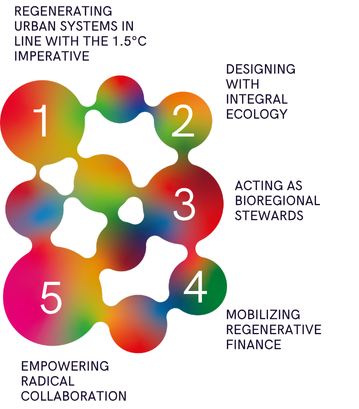
The five strategic priorities outlined below represent collective actions needed across all sectors of society to advance the global regenerative cities movement. These are urgent areas where we call upon cities, governments, businesses, communities, and civil society organizations to collaborate and take action together.

1. Regenerating Urban Systems in Line with the 1.5°C Imperative

Aligned with the FAO’s 1.5°C Roadmap for Agrifood Systems Transformation, cities are recognized as key actors in reaching global climate targets. Urban systems must contribute to halving emissions by 2030 and achieving net-zero by 2050, playing a central role in the transition towards climate-resilient and regenerative futures.

2. Designing with integral ecology

Inspired by models such as Pollica 2050, this approach embraces the interconnectedness of environmental, social, cultural, and spiritual dimensions. Cities must actively restore ecosystems and nurture human flourishing.

3. Acting as bioregional stewards

Cities are not isolated entities. They are deeply embedded in their bioregions. From the watersheds that supply their needs to the farms that provide nourishment, urban and rural systems are inherently interdependent.

4. Mobilizing Regenerative Finance

Finance must serve the regeneration of life. This means reorienting capital to support long-term ecological value rather than short-term extraction.

5. Empowering Radical Collaboration

Regenerative cities are co-created by citizens, not imposed by institutions. They are the outcome of shared leadership, civic imagination, and diverse forms of intelligence.

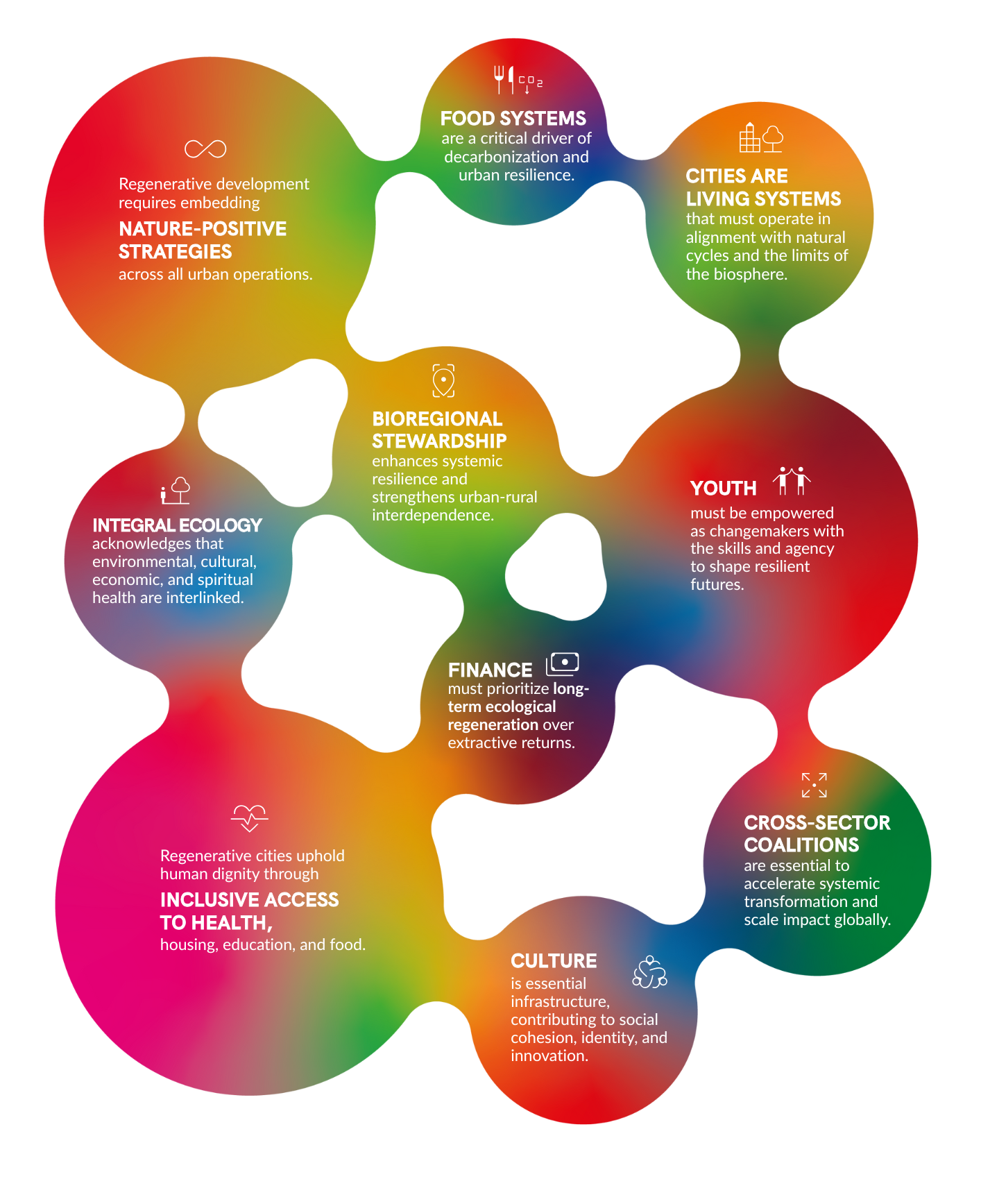
Ten Pillars of Regenerative Cities

Regenerative Cities Report

This report is conceived in direct continuity with the Regenerative Cities Manifesto and its five strategic priority areas. It aims to translate a shared vision into a strategic positioning tool designed to support decision-makers, partners, and institutions navigating the transition from sustainable to regenerative urban development.

The report expands the Manifesto by integrating expert insights and a curated selection of international case studies to show replicable pathways for action that connect urban development, investment strategies, governance models, and territorial regeneration.

Join the Manifesto! Add your signature